3 Taking our first steps with an architect
June 2023
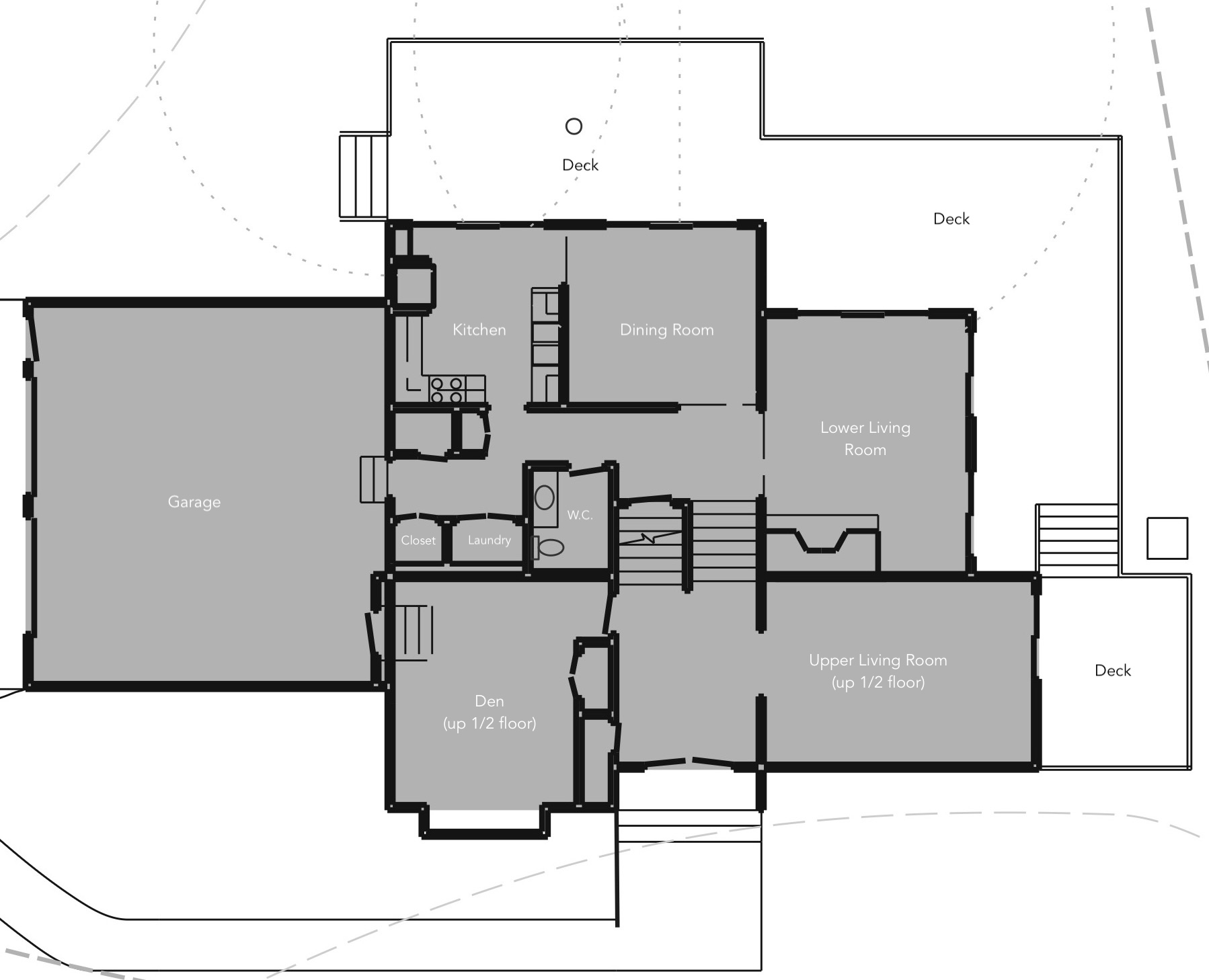 The ground floor of our house pre-renovation
“I don’t know why people hire architects and then tell them what to do.” – Frank Gehry
“Design is not just what it looks like and feels like. Design is how it works.” - Steve Jobs
We have considered renovating our home for quite a while. When I looked in my computer archives, I found this home renovation wish list from August 2020:
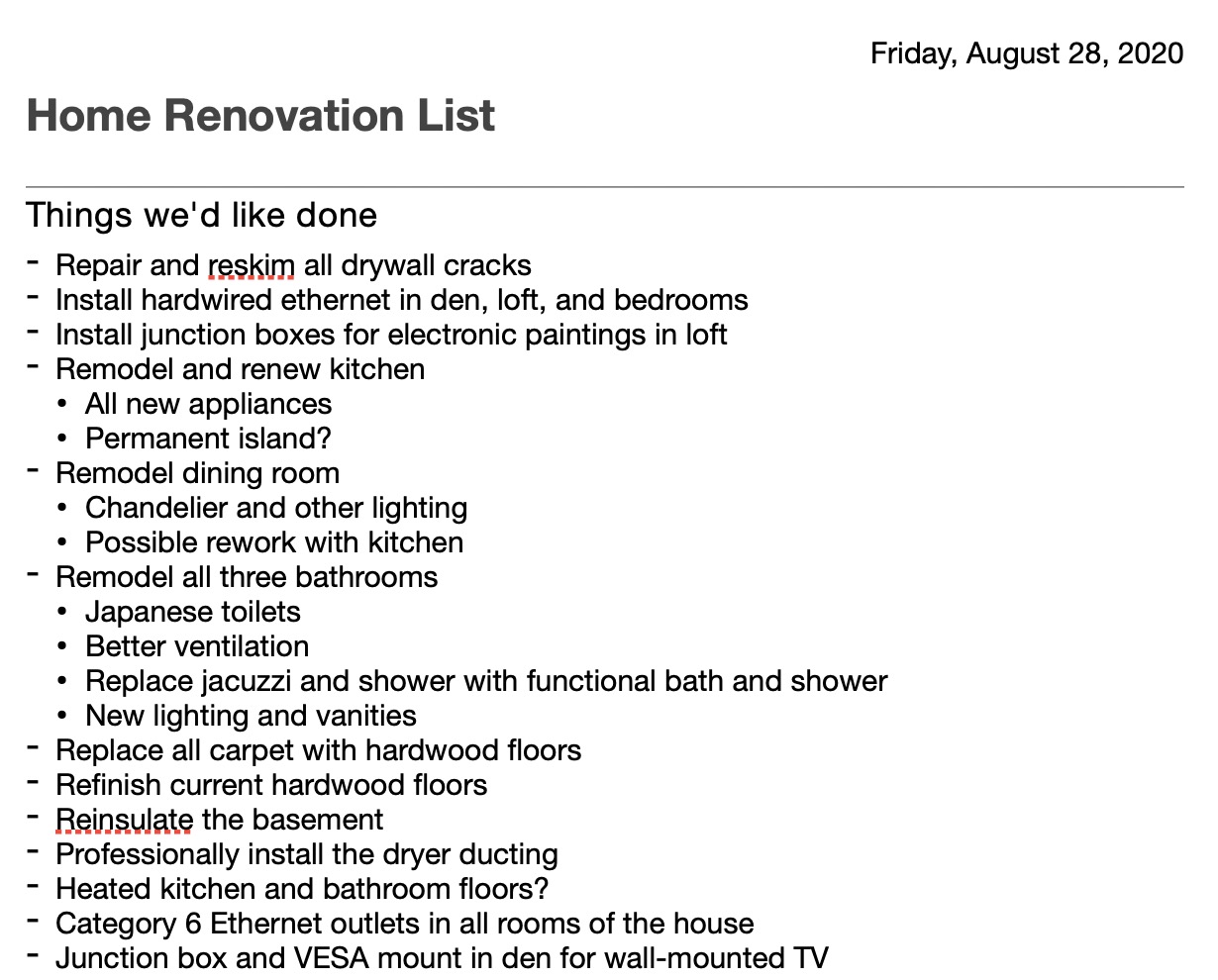
With the exception of the junction boxes for the electronic paintings (which we now recognize as tacky) and the heated floors (which come with a lot of complexity and possible maintenance headaches), this is pretty much what we are looking for in our renovation. Oh, and as we noted in Chapter 1, we decided that we wanted our new house to be accessible to us as we aged.
But before we could ask for an architectural design, we had to find an architect. And frankly, we had no idea how to do that.
Carolyn used to give tours of Boston in conjunction with the Boston by Foot organization. She became good friends with the founder, Polly Flansburgh, whose husband, Earl Flansburgh was a renowned architect. We asked Polly if she had any suggestions for an architect for our project.
She didn’t, but she gave us a referral to someone associated with Earl’s company, we had a meeting at the house, and while we liked his lofty visions, we came away saying, “Huh. I’m not sure that’s our guy.” So we kept looking.
As it turns out, some of our neighbors had recently done some renovations on their house, and we liked what they had done. They recommended Anne Draudt, who heads up Draudt Design and lived in our town. We met Anne and immediately liked her style and down-to-earth ideas. So we gave her our renovation wish list along with our desire to age in place, and let her go to work.
What constitutes accessibility for aging in place?
Aging in place is a concept, not a set of specifications. Accommodations for aging in place generally begin with fairly simple steps such as:
- Increased lighting. Older people require more light to avoid floor hazards that might cause them to trip.
- Light switches with large flat panels rather than small toggle switches. Paddle switches are easier to manipulate with hands that may be arthritic or otherwise compromised.
- Accessible light switches at both ends of the stairs. Easily accessible lights for stairs help avoid falls.
- Lever handles for doors. Levers require less hand and arm strength than knobs that require turning.
- Grab bars. Grab bars near toilets, showers, and baths help prevent falls, especially in areas that may be wet.
- Hand-held flexible shower heads Shower wands make it easier to get clean easily while in a wheelchair or otherwise seated.
Of course, the Americans for Disabilities Act (ADA) does provide a comprehensive list of specifications for public buildings. Alternatively, you can read more accessible articles about changes needed to age in place such as [this 2021 one that appeared in This Old House magazine](https://www.thisoldhouse.com/home-safety/creating-a-forever-home-aging-in-place. As these references note, you don’t have to make your home look like a hospital or nursing facility to age in place. Because our house is a private dwelling, we are not legally obligated to become fully ADA-compliant, but we at the same time, we want our home to be livable when we may have difficulty walking or may require a wheelchair.
Massachusetts laws regarding when a renovation triggers a need to be ADA-compliant are somewhat controversial. The Boston Globle featured an editorial recently about the requirement to make an entire property ADA-compliant if the renovation exceeds 30% of its value. I believe this only applies to properties that are not owner occupied, but the article suggests otherwise. All I know is that it didn’t seem to apply to us.
Our first conversations
With our wish list for the renovation in hand, we met with Anne Draudt in March 2023. She then took our input and put together 5 different sketches (not full-fledged designs) for us to react to. Each had a slightly different approach to our goal of aging in place.
Anne created designs which I think of as “ADA-ready.” While the designs don’t include every ramp and grab bar necessary to make our house ADA-compliant, Anne did include all the infrastructure necessary to allow us to add ADA-compliant features fairly quickly and inexpensively. Her sketches several accessibility features we hadn’t thought including:
- 36-inch wide doorways and corridors. Three foot wide doorways easily accommodate most wheelchairs and people on crutches.
- Blocking for grab bars near toilets, baths, and showers. While Anne did plan for some grab bars, she recognized that we may wish to add more as we age. Additional blocking was added to the bathrooms to allow us to upgrade our grab bars as needed.
- Space to install a garage ramp. While we do not plan to install a garage ramp in this renovation, Anne noted that a wheelchair user would need a way to access the house without climbing steps. Her designs allocated space in the garage so a ramp could be added as needed.
Anne’s sketches gave us 5 different approaches for continuing to live in our home as we aged. They were as follows:
Option A: Add a first floor bedroom
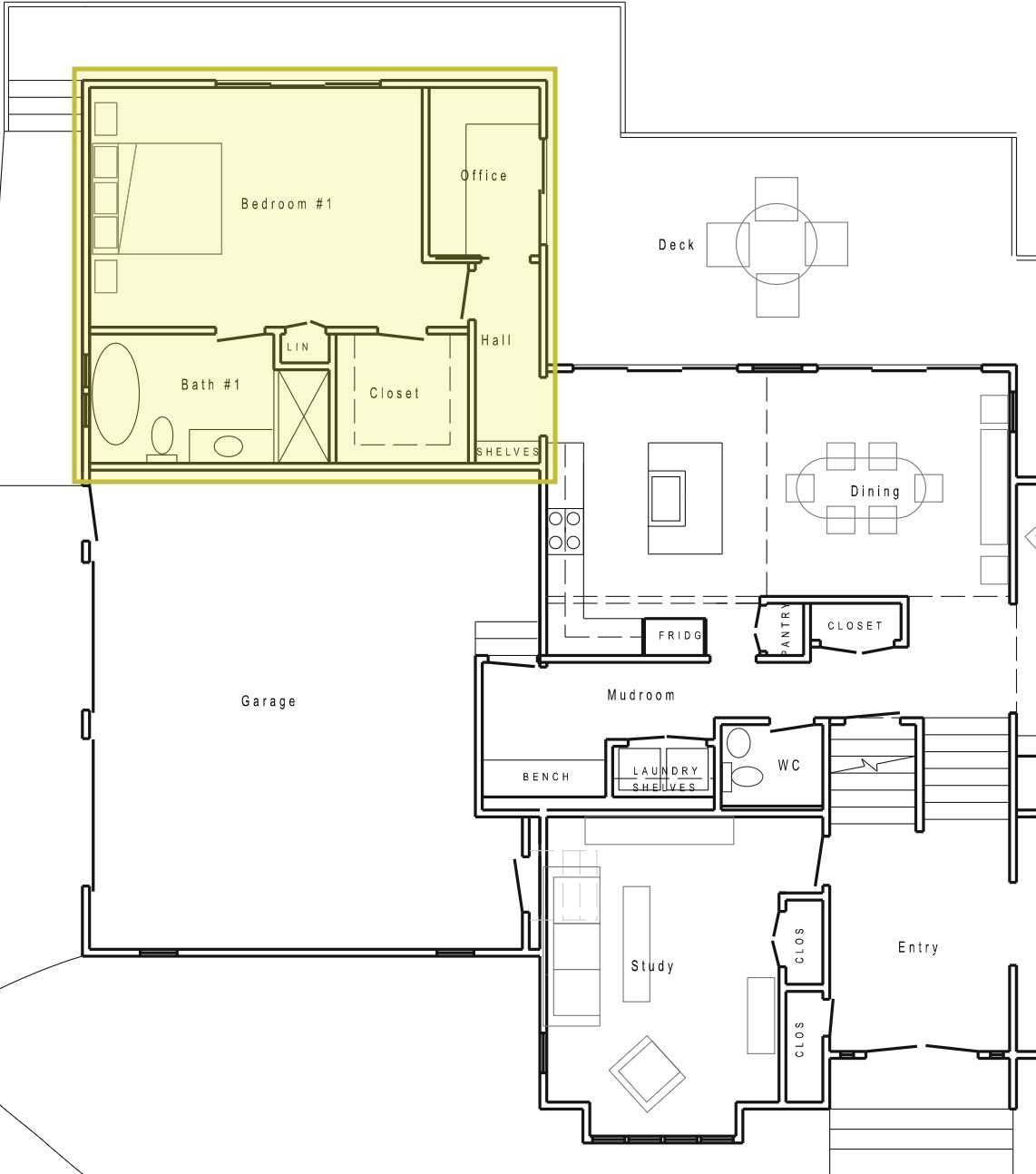
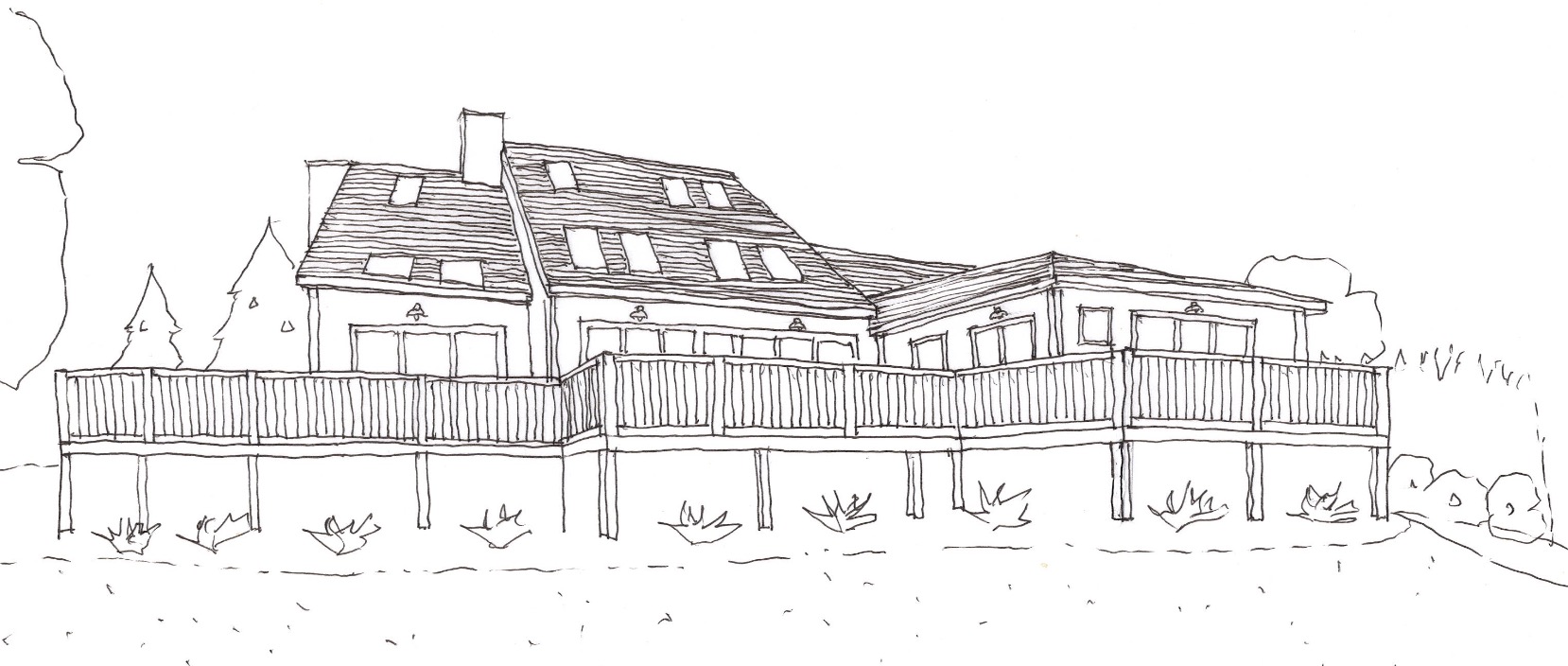
This design provided one level living on the ground floor of our house while leaving the kitchen and dining room pretty much unchanged. Adding this bedroom and bath would, however, change the footprint of the house and possibly require septic upgrades.
Option B: Install an elevator in the garage
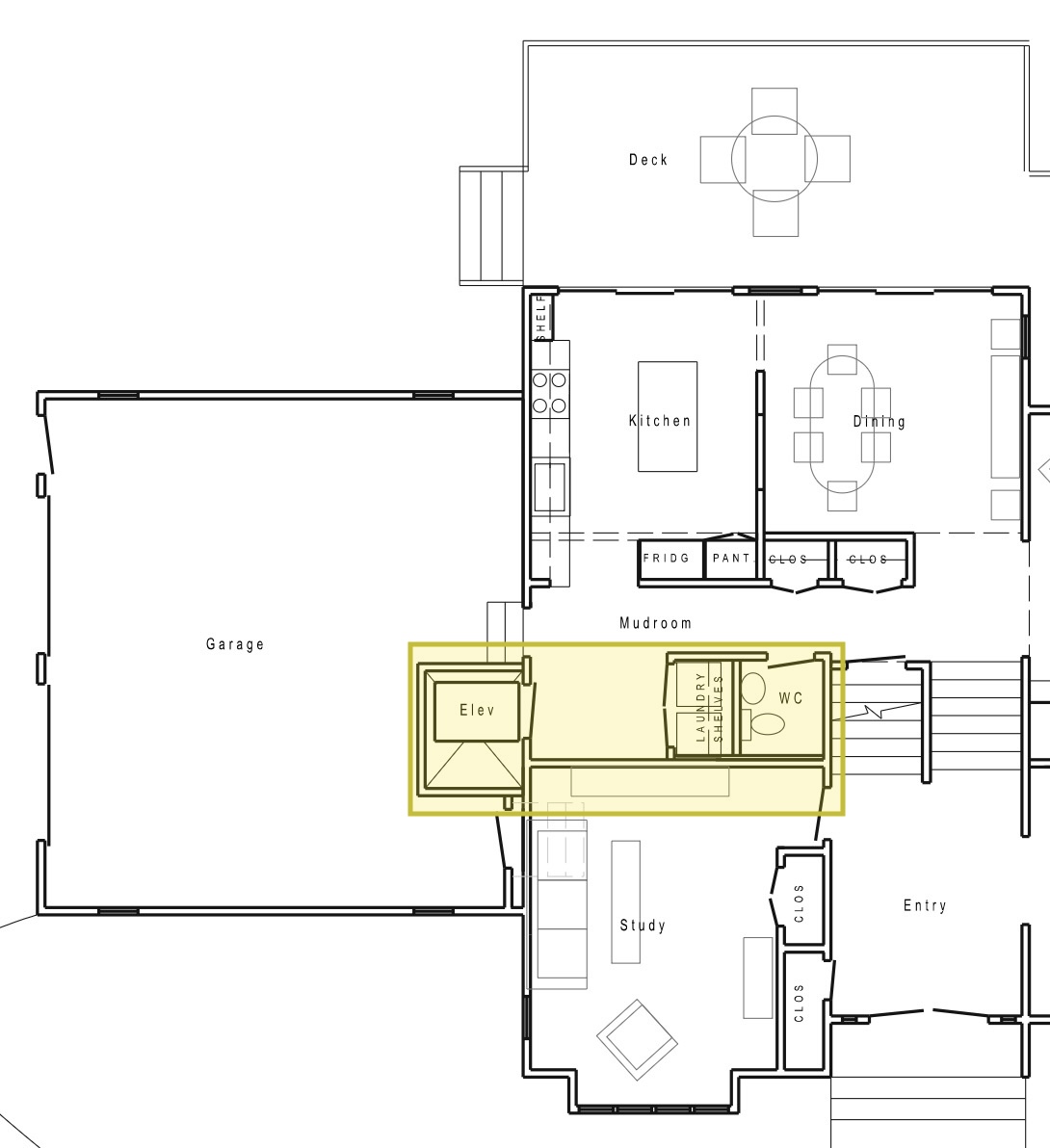
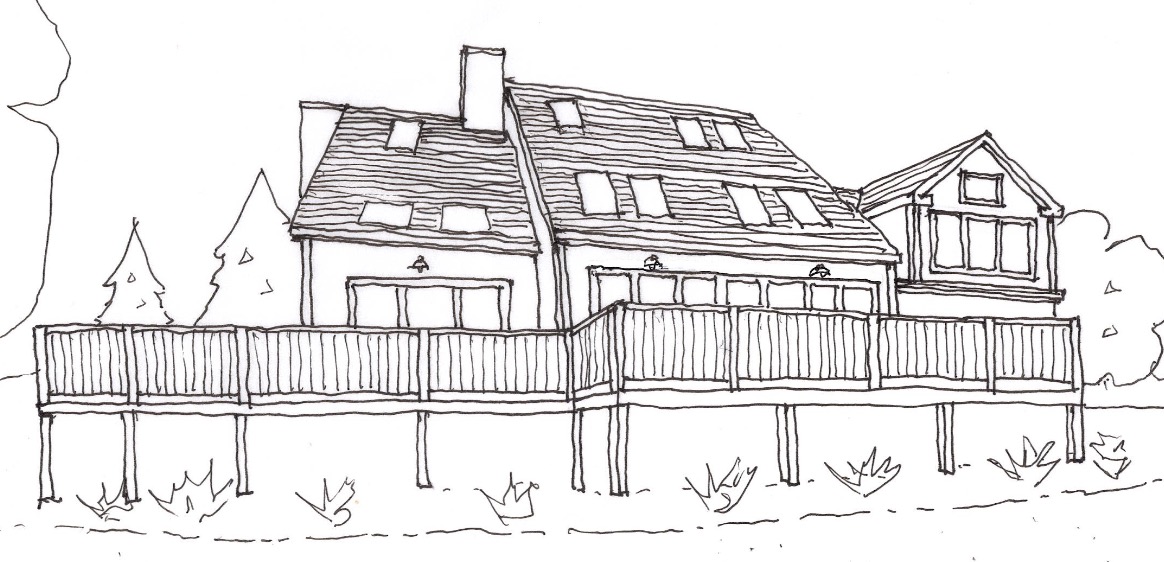
This sketch adds an elevator in the garage area and shrinks our ground floor powder room to straighten out our kitchen hallway. It also swaps out the skylights in our primary bedroom above the garage for a 3-pane sliding glass door, improving the views from the bedroom
The garage elevator would only have 2 stops: the garage and the primary bedroom above it. This sketch does not change the footprint of the house, but it would not provide mobility-impaired access to our den, upper living room, or top floor bedrooms.
Option C: Add a bedroom and expand the kitchen toward the deck
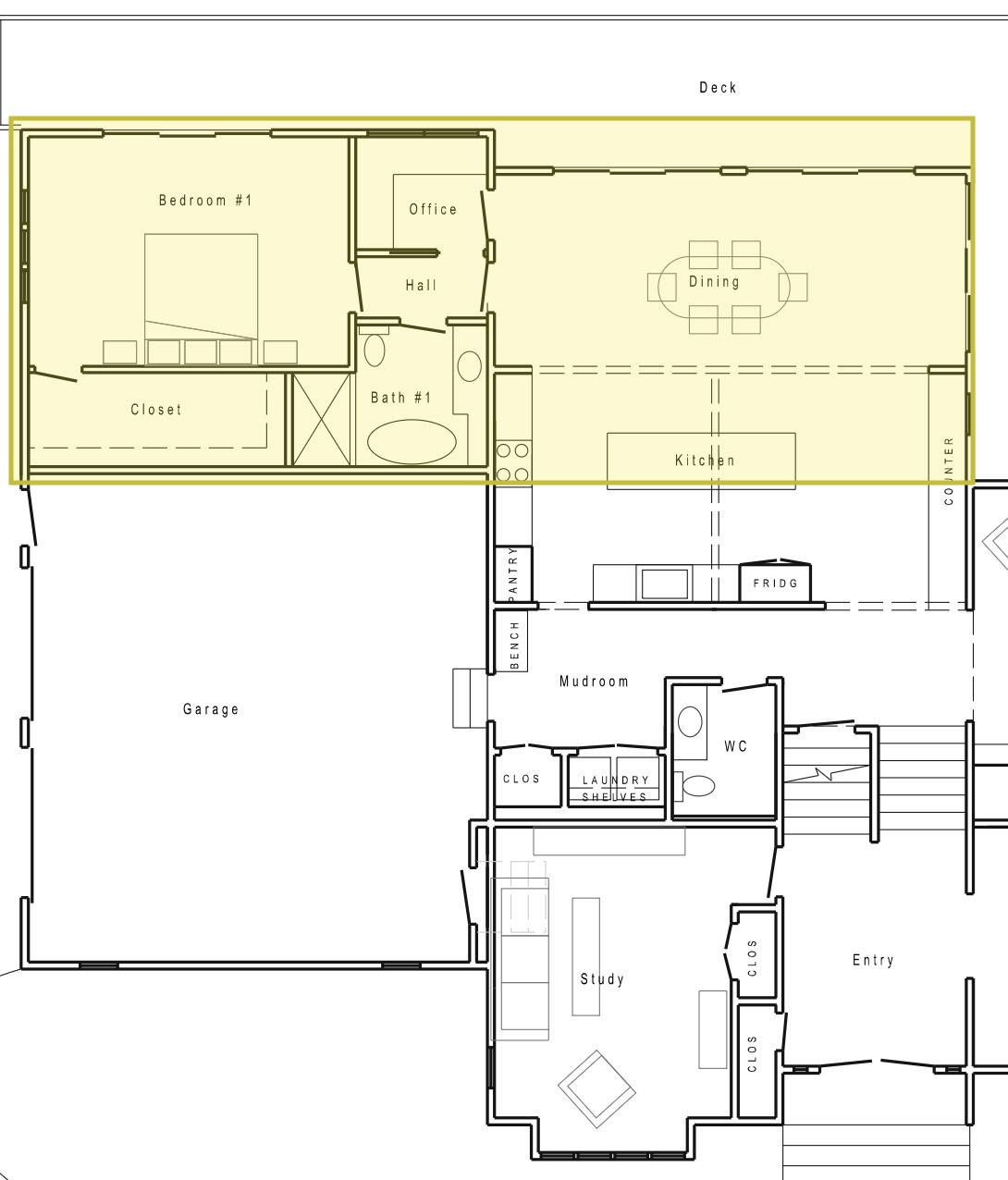
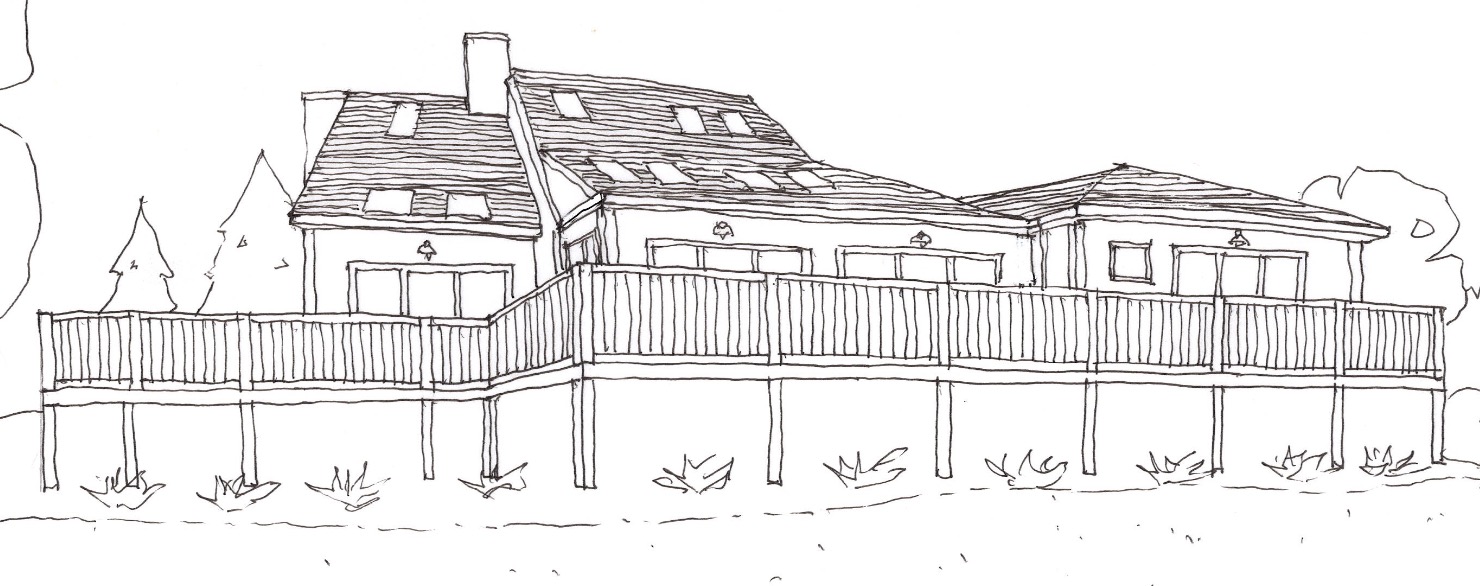
This design adds the first floor bedroom and expands our kitchen, allowing the addition of a large island there. It also creates a new larger dining room to the south of the kitchen, thereby reducing the deck there. Once again, this approach might incur permitting issues because we’re adding a bedroom and bathroom to our house, which would trigger a review of our septic system.
Option D: Expand the kitchen, add an elevator, and attach a porch
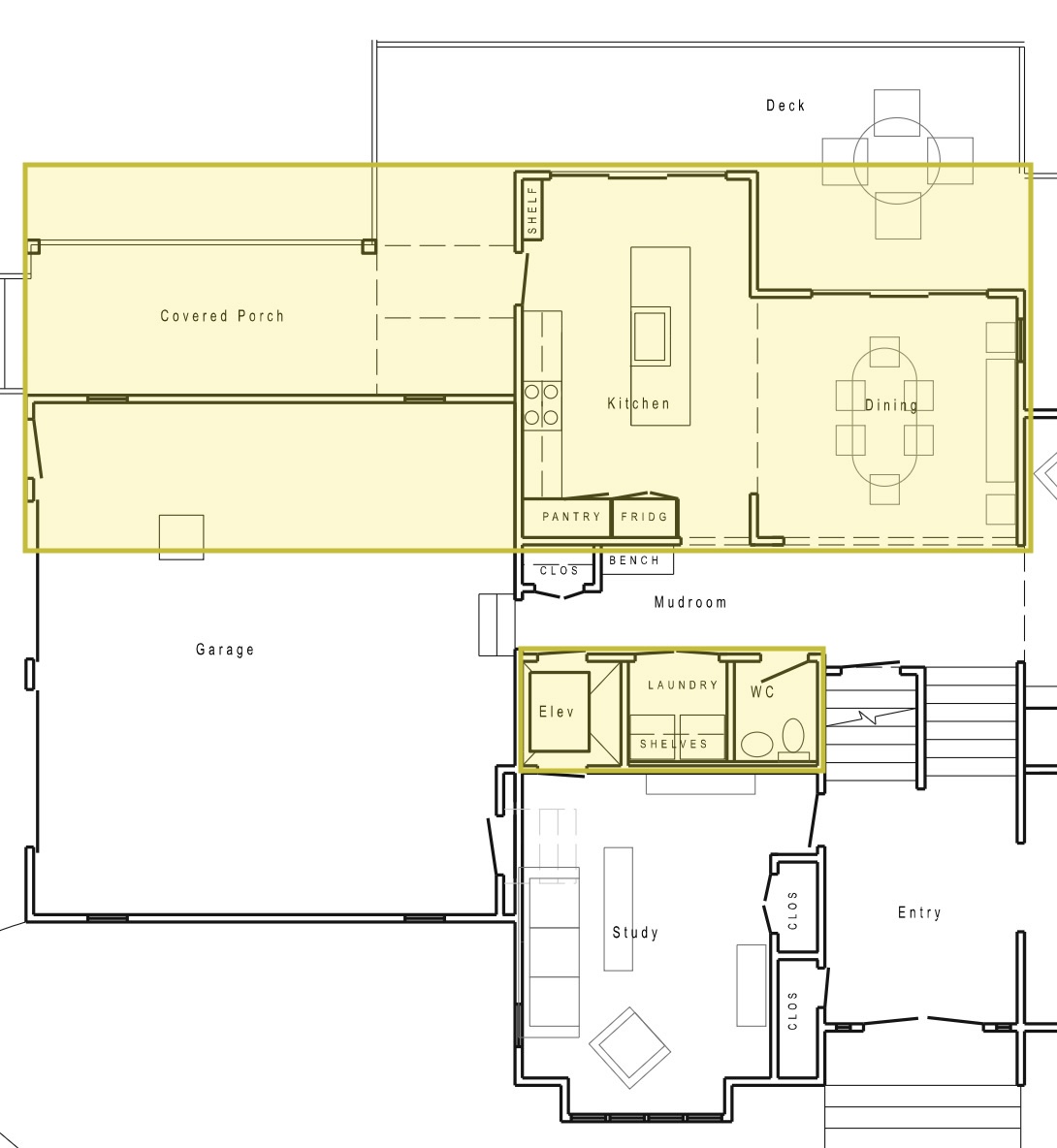
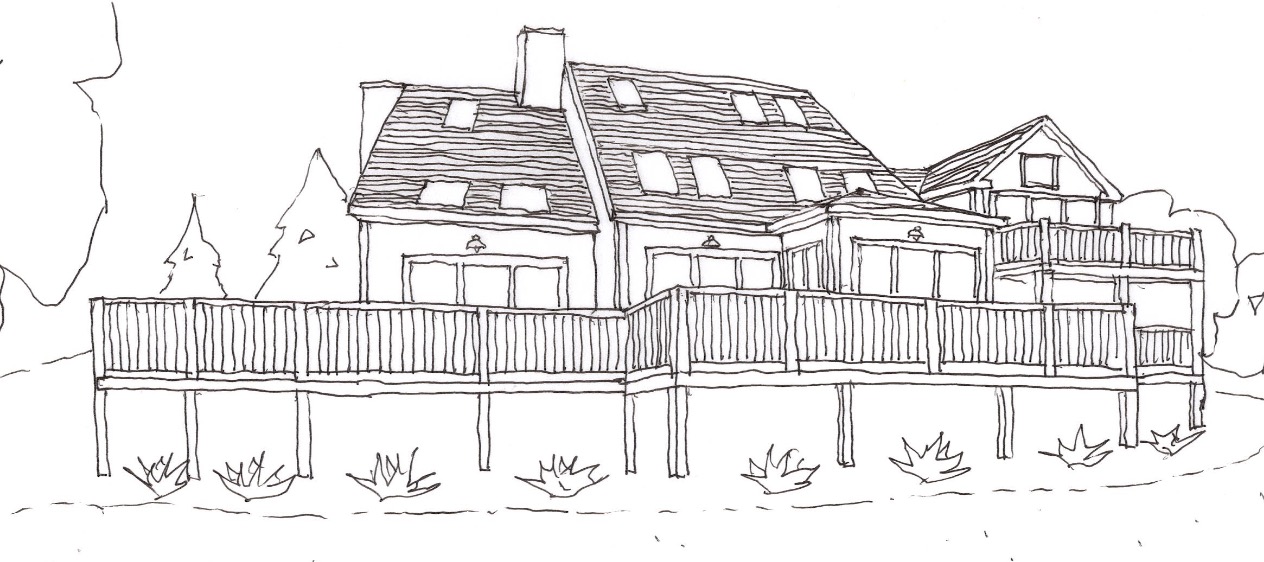
This design leaves the kitchen and dining room in their same positions as they are now, but expands just the kitchen southward. It also incorporates the straightened out hallway shown in Option A and puts the elevator next to the garage, where is could possibly reach the upper floors.
What sets this design apart is the addition of a porch to our primary bedroom. While we already have a balcony to the east on this bedroom, having another to enjoy the views to the south would be a major plus.
Option E: All of the above
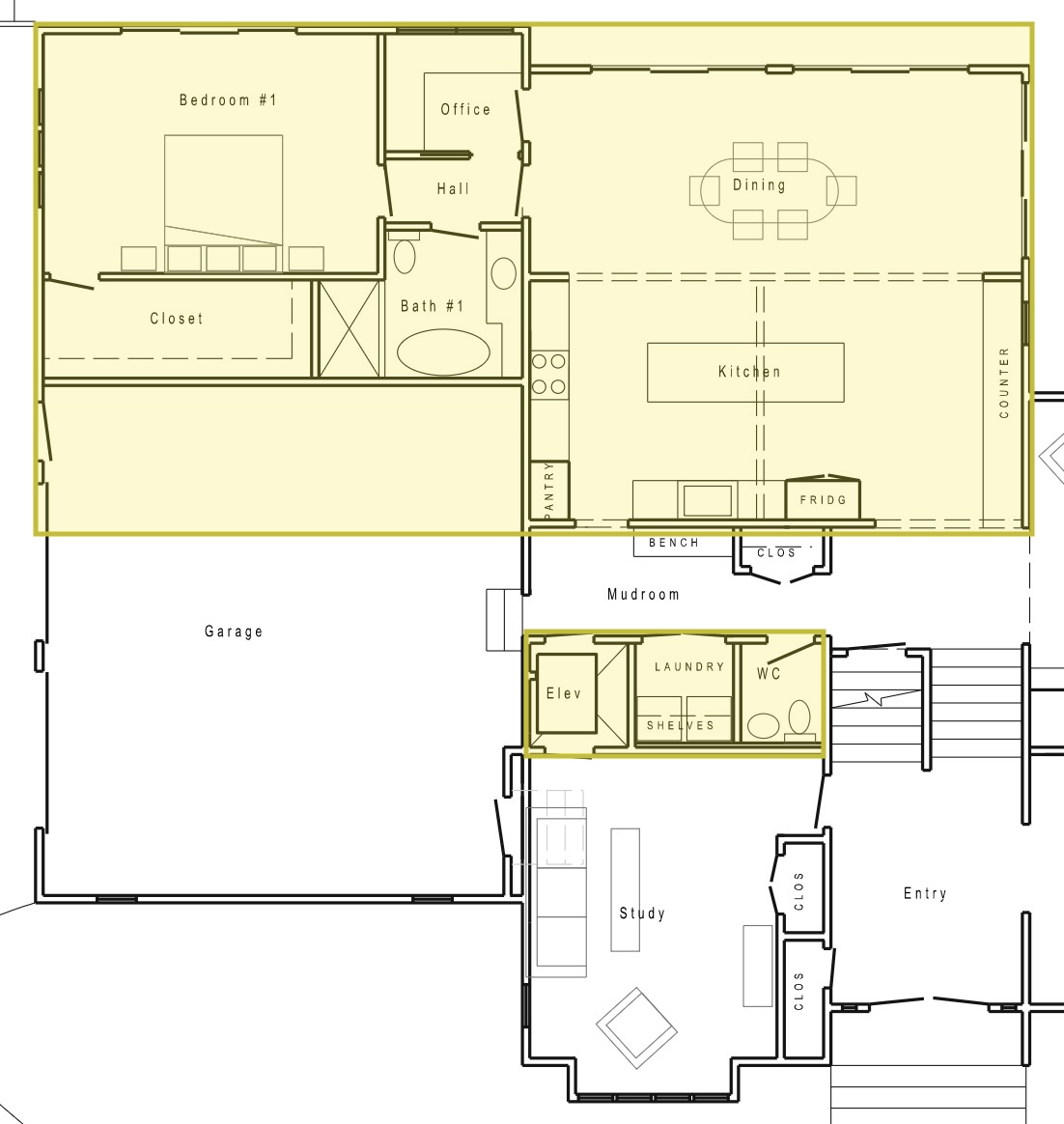
This version is largely a combination of options C and D.
Anne’s options will force us to make some choices
One of the reasons we choose Draudt Design was Anne’s philosophy of providing us with a set of options and then basing future work on our feedback. Clearly Carolyn and I have some thinking to do about which aspects of these options we like and don’t like. Given that we have several trips to the UK planned for the summer (including a wedding and the Edinburgh Fringe Festival), we will take the plans with us and email notes back to Anne as we digest them. But with all that said, I think Carolyn and I both feel like we’ve at least made a start on our renovation project.