13 So many choices
October 2024
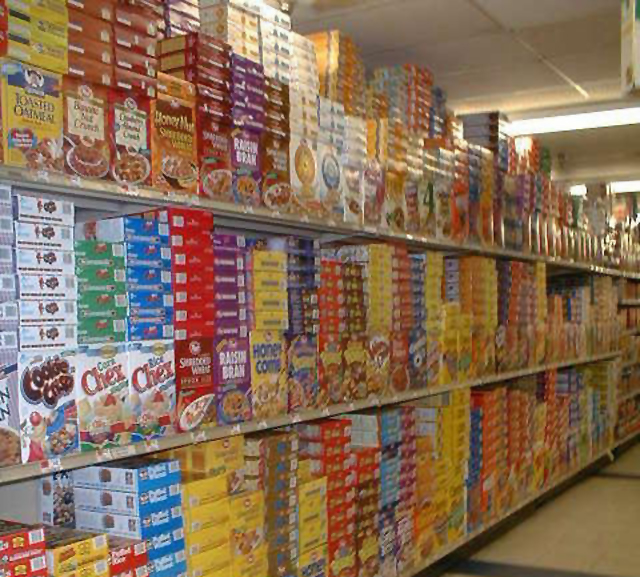
- An average cereal aisle
Have you ever found yourself staring at a shelf in the supermarket, trying to figure out which cereal you should buy?
In his book The Paradox Of Choice, sociology professor Barry Schwartz takes his readers on a trip to a small supermarket. This average store offered 285 varieties of cookies, 85 flavors and brands of juices, and 95 varieties of chips, as well as 230 soup offerings, 120 different pasta sauces, 275 varieties of cereal, and 175 types of tea bags.
How can one possibly choose anything from all that variety?
Well, the honest answer is that we don’t. Most of us have brands and products that we have grown accustomed to buying, and we mostly just buy those.
Well, the average grocery store only stocks about 30,000 items. The number of products offered for home construction and renovation is much, much more. And our job over the next couple months is to choose which ones we want in our house before a single nail is driven.
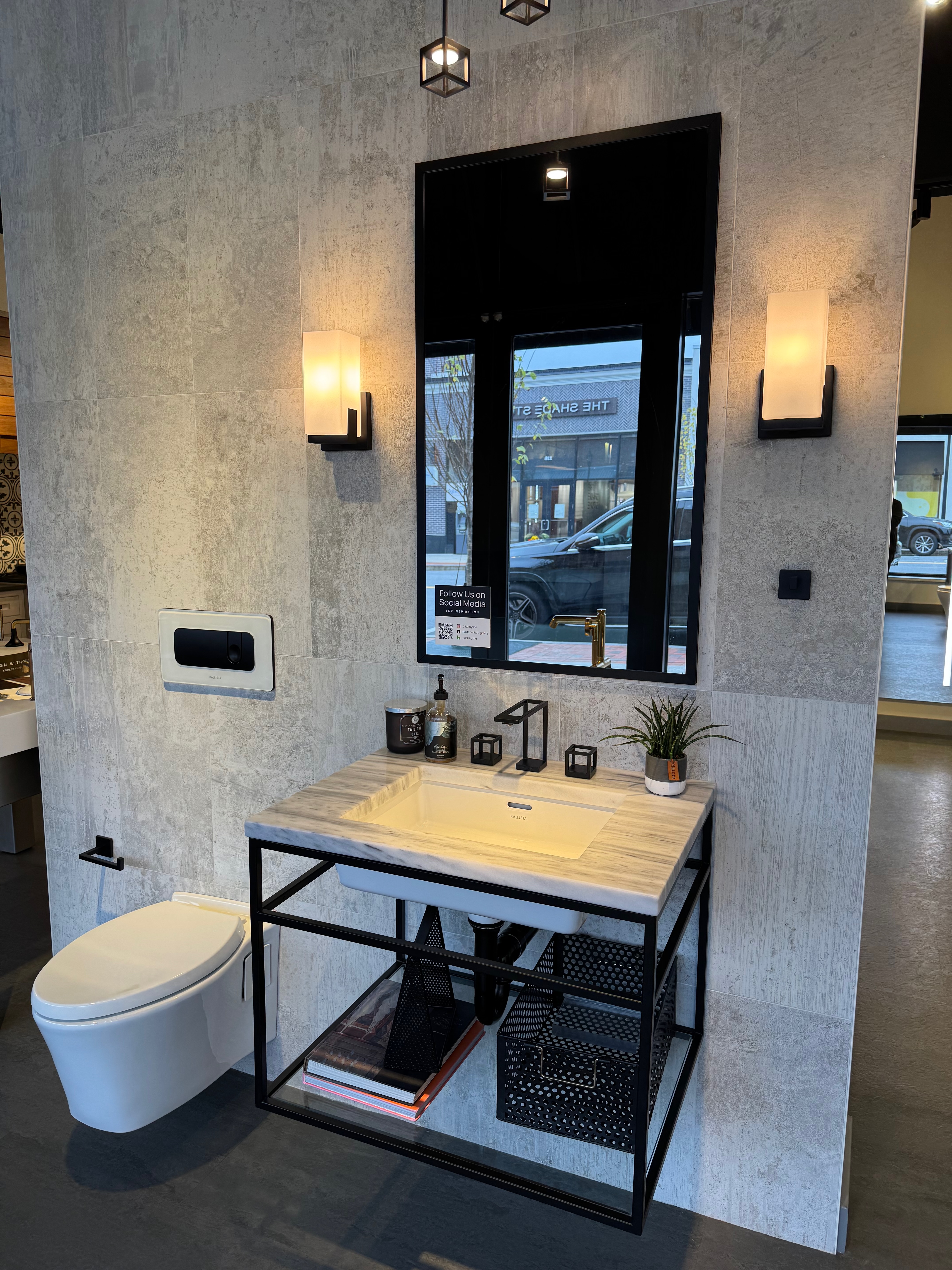
Carolyn and I visited a Kohler showroom in Burlington to try to wrap our heads about the many choices for our sinks and bathrooms, and we came away a bit stunned at our own cluelessness about the current state of plumbing fixtures. For example, we decided we really liked this set of fixtures for our new small powder room across from the kitchen.
We thought the black outline faucet featured was stylish (to the extent retirees can be stylish) and went especially well with the marble basin. A better look at the faucet is below.
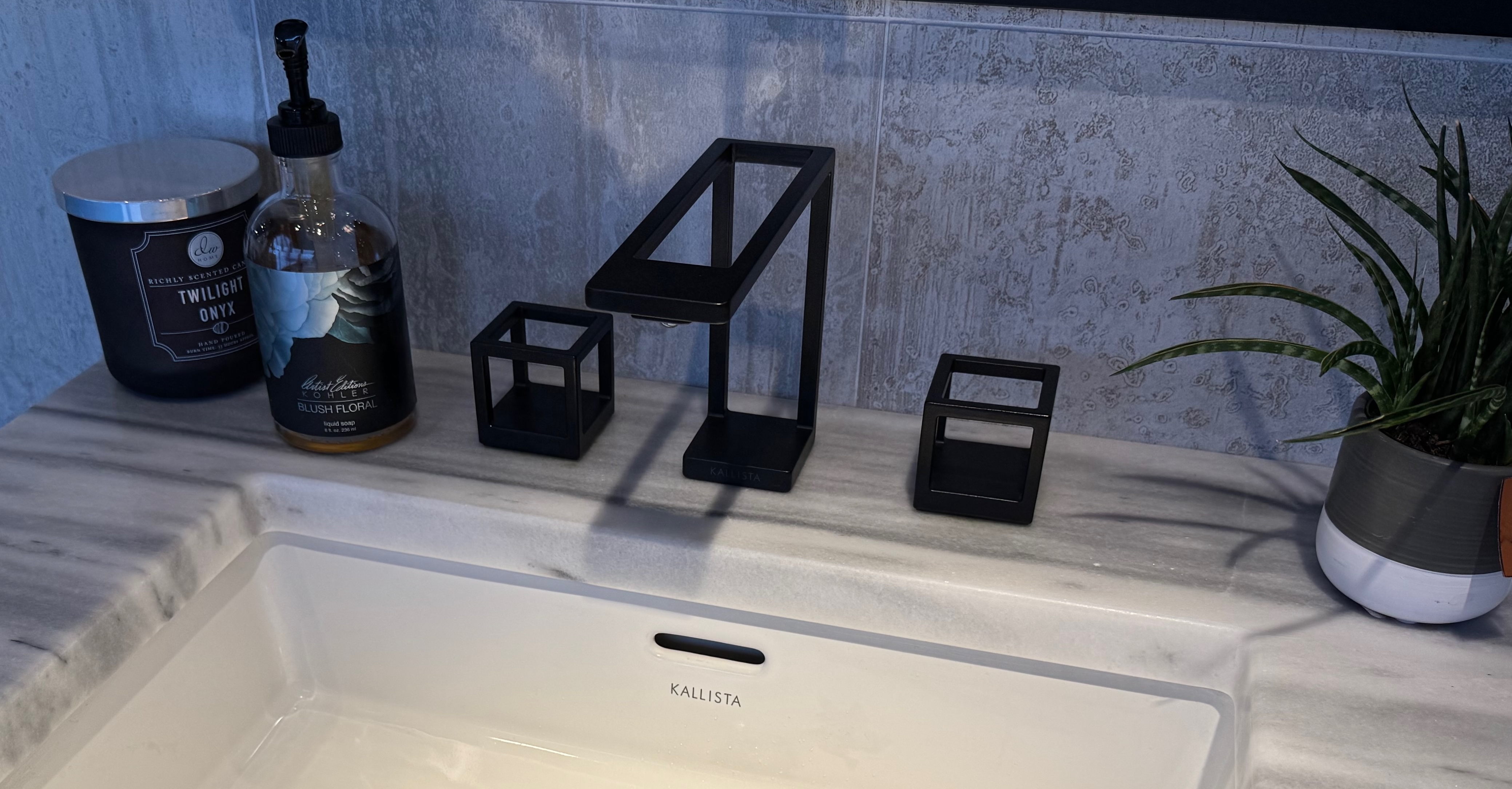
The showroom person agreed that it was a very striking design as it was part of their high-end Kallista collection. This design was created using an industrial 3D printing process, and just the faucet sells for more than $8,000.
Like I said, we’re clueless about modern plumbing fixtures. Oh, they offer matching hanging lamps to go with too. We didn’t ask now much those were; there didn’t seem to be any point.
Fortunately, we have help. Gilmore Building arranged for us to work with interior designer Julie Salmon of Salmon Design, who is helping us sort through the myriad choices we face. Julie has this apparently magical ability to whittle roughly 1,000 kinds of tile down to 5 we should really look at, and sure enough, those 5 are all worth looking at.
First stop: kitchen cabinets
Our experience at the Kohler store emphasized that we shouldn’t be allowed to wander home improvement stores unchaperoned, so Julie kindly escorted us to Kitchen Associates in Sterling, MA to choose kitchen cabinetry. Carolyn and I had worked with Kitchen Associates back in 1992 to renovate our kitchen prior to the arrival of our first child, and we thought it would be good to work with them again. At that time, we had chosen oak cabinetry with a Champagne wash which we liked very much. However, Kitchen Associates consultant Robert and Julie informed us that modern kitchens look quite different. Specifically:
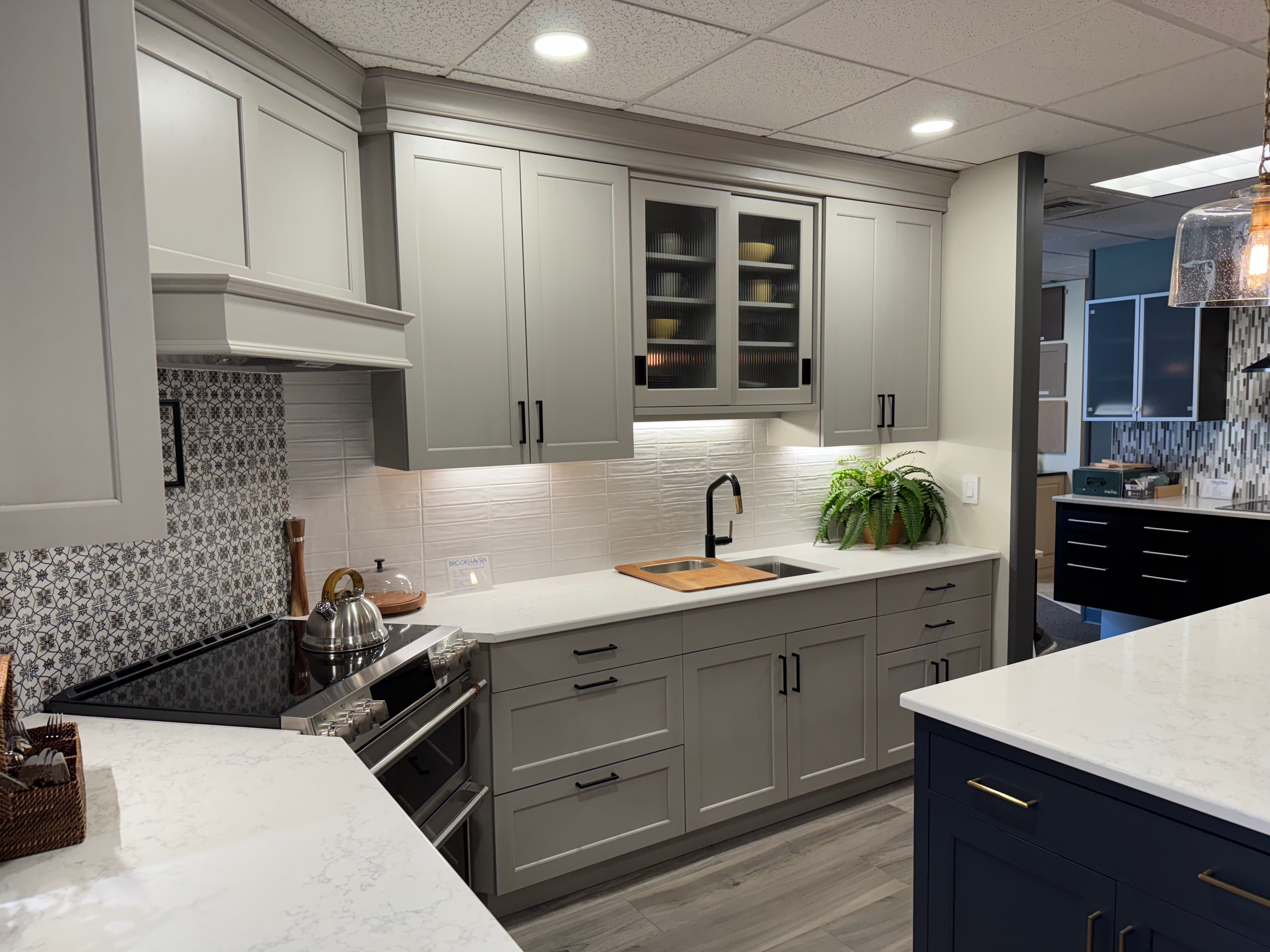
- Painted cabinets have replaced wood finishes. Wood finishes have become less popular as kitchen designers use cabinet colors to blend in with other aspects of decor.
- Remodelers prefer natural stone to synthetic countertops. When we last remodeled in the 1990s, we used man-made Corian countertops. You can still buy a wide range of synthetic countertops including Quartz, but most remodelers prefer natural stone if the budget allows it because it creates a greater visual effect.
- Neutral colors and black fixtures are in. Grays, beiges, and whites have become very popular kitchen colors that then can be contrasted with black faucets, handles, and appliances.
I rather liked the style of the kitchen seen in the photo above, including the gray cabinets, but I think we’re going to go with an oak wash again because we liked our prior kitchen so much. Kitchen Associates gave us some cabinet panel samples to take with us so we could see how they might fit with other selections we make.
Second stop: Stonework for countertops
The Kitchen Associates showroom was only a bit overwhelming. Our stop at Granite and Marble Depot in Westborough was more so. We walked into a warehouse-sized building with a giant 5-ton crane and row after row of stone slabs.
Given our focus on ease of use and low maintenance, we decided with Julie to focus on two materials for our countertops:
- Quartzite for the kitchen. This extremely hard natural stone is a metamorphic rock composed almost entirely of quartz crystals (quartz crystals are what I remember learning about in geology class). The quartz crystals are bound together by silica cement created by melted sandstone. It’s harder and more durable than marble or granite and doesn’t require maintenance other than annual coating with a sealant. However, because quartzite is cut from natural stone quarries, colors and patterns are limited to what the showroom has.
- Quartz for the bathrooms. As it turns out, the construction industry has figured out how to bind quartz crystals with other types of manufactured cement than melted sandstone, and that product is confusingly called quartz. Quartz countertops look a lot like quartzite, but don’t quite have the same subtle patterns found in the natural rock. However, because the cement is man-made, quartz countertops are available in a wide variety of colors and patterns and are generally significantly less expensive.
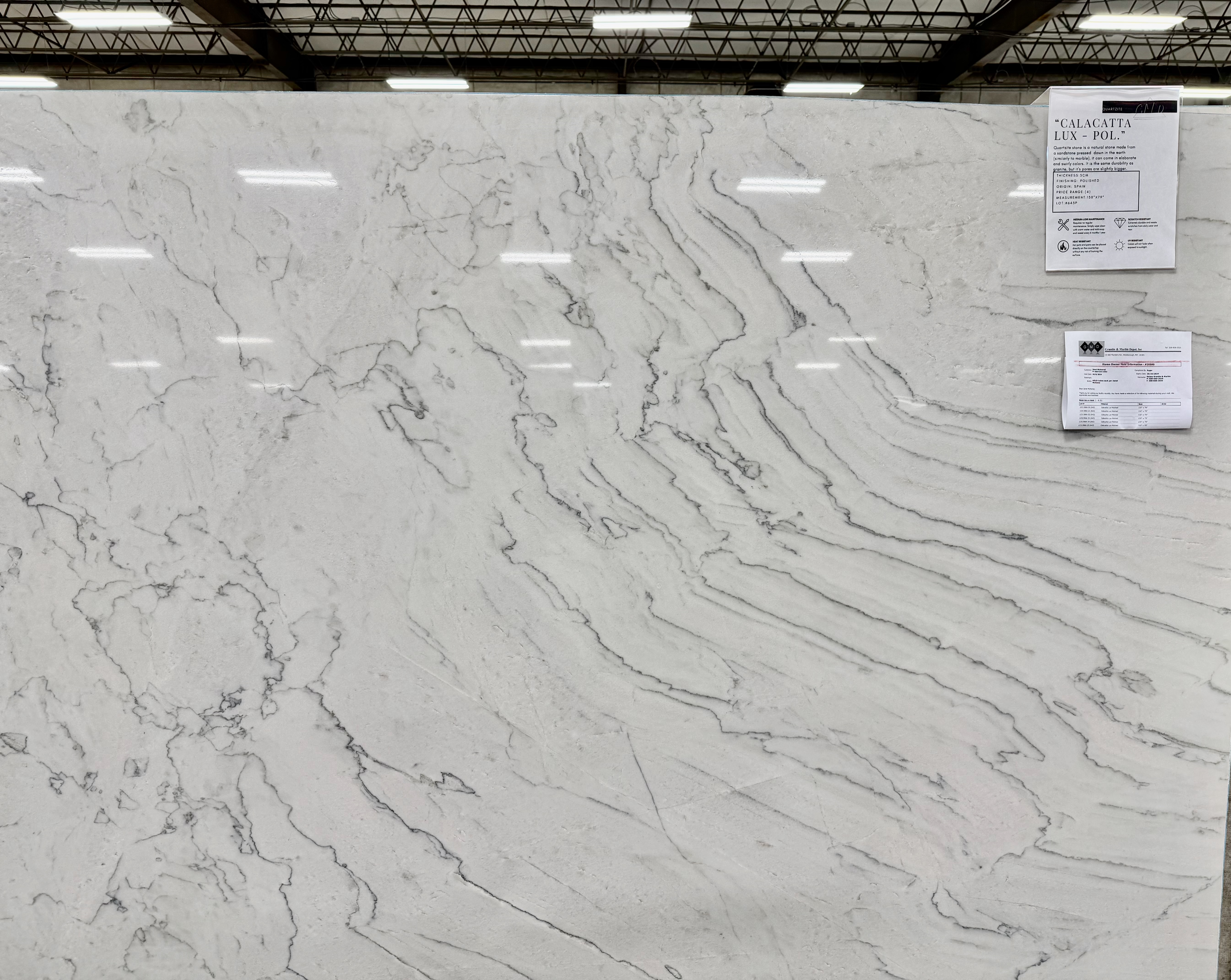
We spent hours looking at roughly 50 or so slabs of quartzite, all of which were subtle variations of this:
We also looked at some quartz slabs that looks like this:
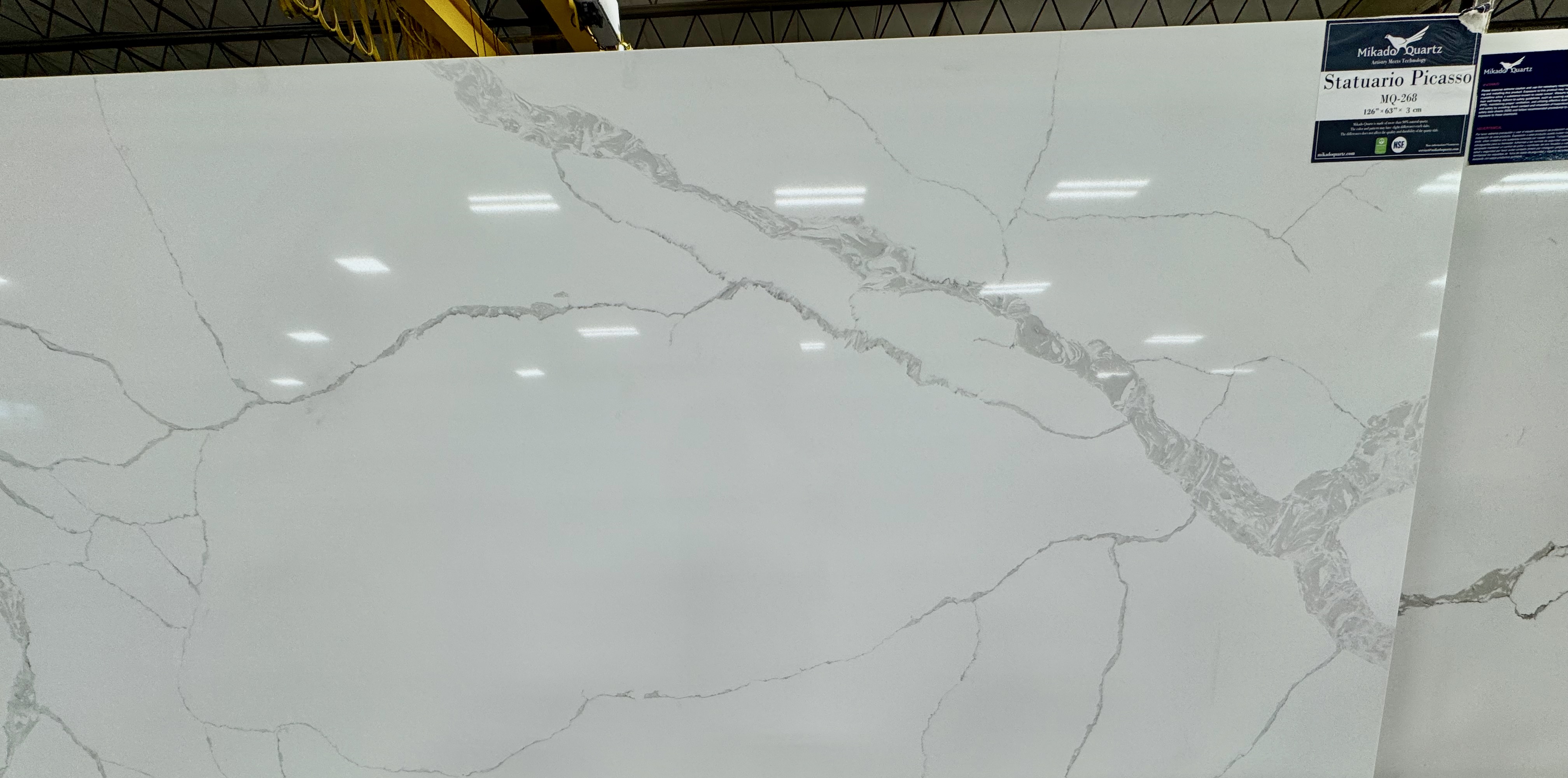
Once again, Julie steered us to 4 or 5 choices, all of which we liked. Because we were primarily looking at quartzite, they all looked similar, but each one was unique. That uniqueness adds an additional pressure to the choice: until you put a deposit down, someone else can buy the stone you love before you do.
We’re not to the point of selecting and buying a stone yet, and unlike at Kitchen Associates, we can’t take samples home because we don’t own a 5-ton crane. We’ll have to come back another day to make that choice.
Third stop: Floor tiles
So if kitchen cabinets and countertops didn’t make us sufficiently overwhelmed with choices, our stop at Best Tile in Shrewsbury, MA put us over the top. Fifteen thousand square feet of tile choices kind of boggled our minds, but once again, Julie walked us back from the ledge.
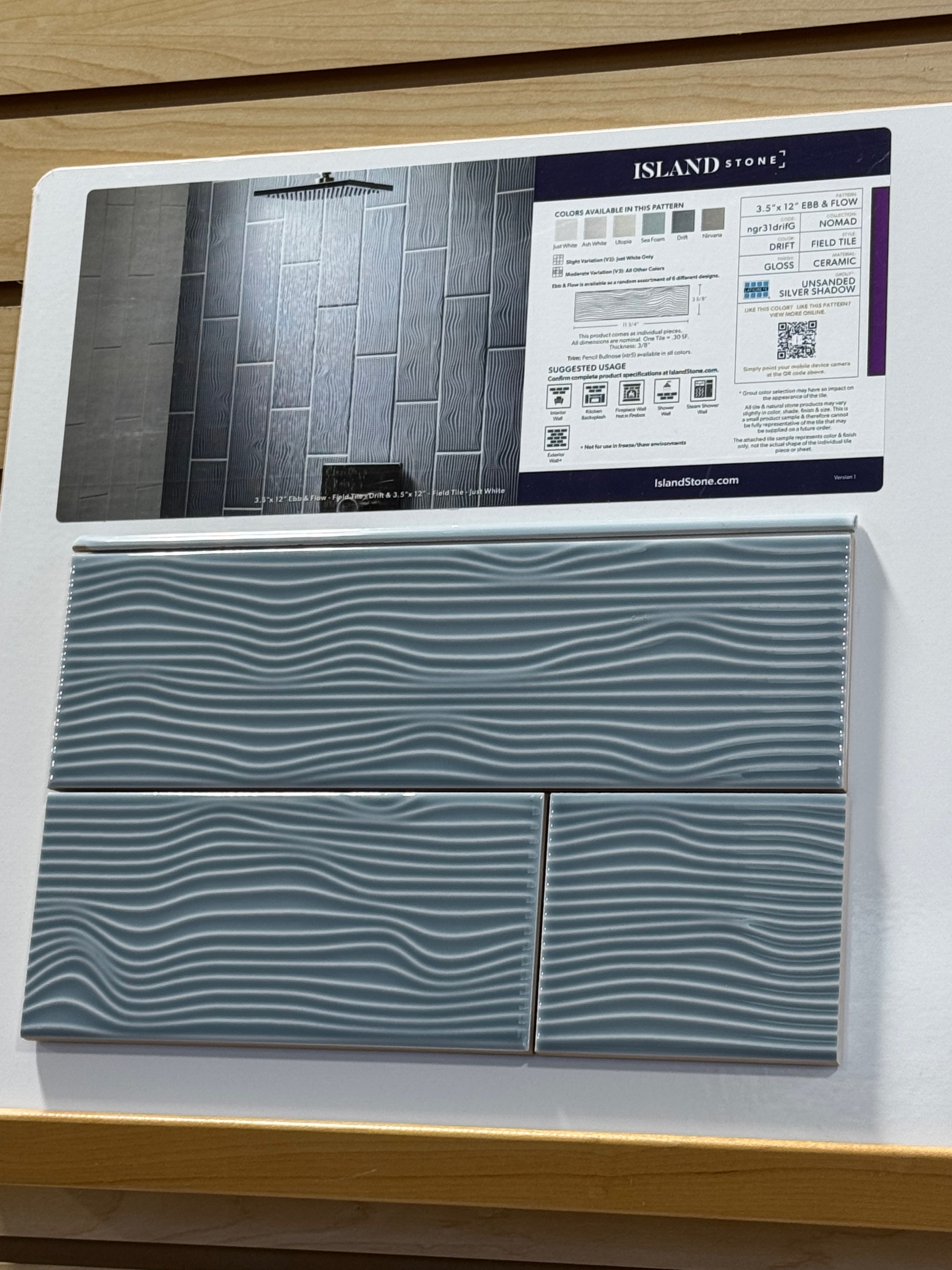
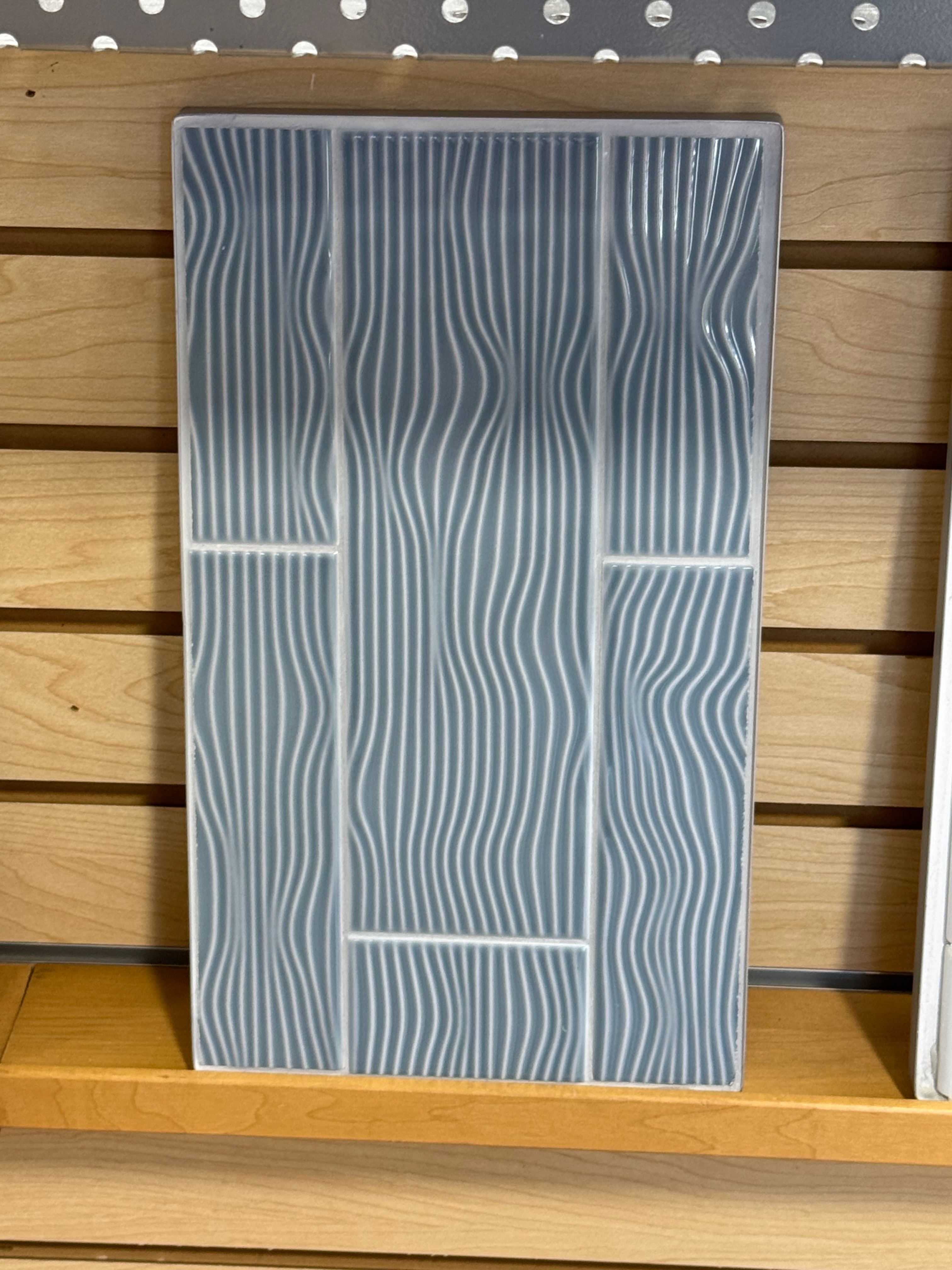
Julie has been gently guiding us toward neutral colors for our tiling, and we found a lovely sandstone colored tile that we think will work well for our kitchen and bathroom floors. As we wandered the floor, though, I stumbled on this blue tile sample that I thought would work well in our shower, and to my surprise, everyone liked it, especially in the vertical layout shown in the sample photo.
While this tile isn’t a neutral color, I think it works pretty well with the other colors in our kitchen and bathroom palette, as shown below:
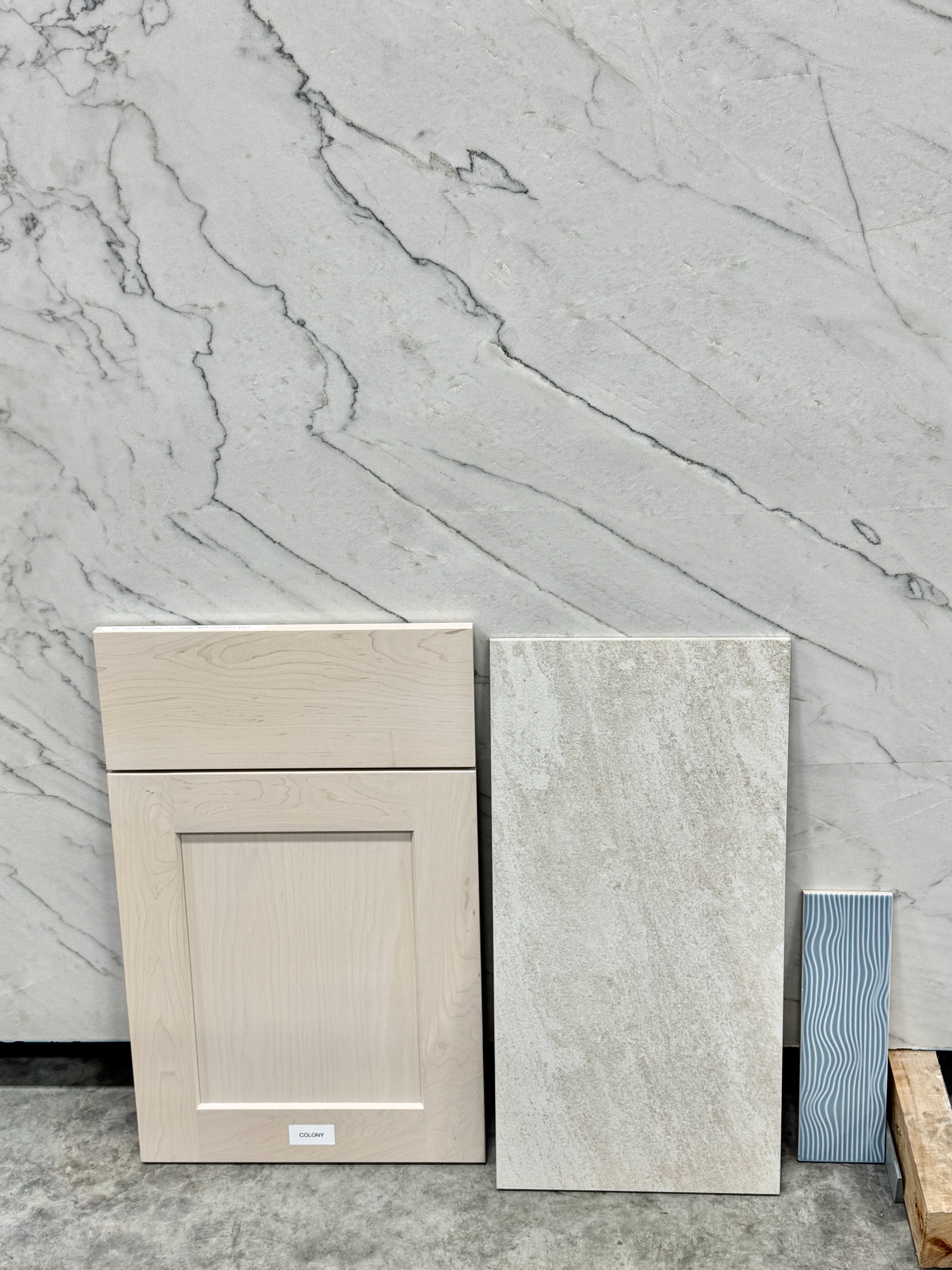
Truth be told, I can’t tell whether this combination is going to work with actual cabinets and fixtures or not, but Julie reassures us that it will look fabulous. I became so bleary-eyed from looking at tile that I started considering a pattern I could more easily relate to:

Still, we at least a start on what our kitchen and bath might look like, so I guess that’s progress. It still seems a bit abstract and unreal, but we now have samples that we can play with at home. In the meantime, we have some work to do on the financial side.